
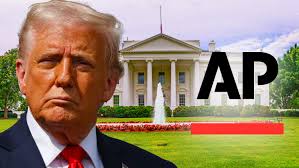
In Washington D.C., a major fight over freedom of the press is happening in court (Oval Office). The Associated Press (AP) and the Trump administration went before a federal appeals court on Monday. This fight is not about money. It is about access—specifically, access to the White House Oval Office.
The case asks a very important question. Can the President decide which reporters can cover the government based on what those reporters choose to write?
The AP says the government cannot punish a news group for its honest point of view. The Trump administration says the President has the right to decide. Who to invite into sensitive, limited spaces, like the Oval Office.
This battle over AP Trump Oval Office access has big meaning for every American. It is about whether the government or the press controls the information that citizens receive.
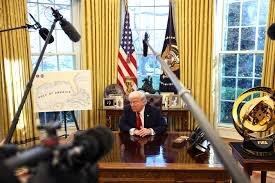
The Small Name That Started a Big Fight Oval Office
The whole legal battle began over the name of a body of water.12
In February 2025 President Trump signed an executive order. The order directed the government to change the name of the Gulf of Mexico to the Gulf of America.
The Associated Press, a world news organization, decided how to handle this change.
- AP’s Choice: The AP said it would continue to use the established name, “Gulf of Mexico,” in its reports. It said it would also mention the President’s new name in a fair way. This decision was based on the AP’s long-standing rule about style and accuracy.17
- The Administration’s Action: The White House did not like this choice. Soon after, AP reporters were barred from the “pool” of journalists. Who cover the President up close in the Oval Office. And other sensitive areas. The White House said this was a response to the AP’s decision not to fully use the new name.19
- The President’s Comment: President Trump said that AP’s access would stay blocked until they changed their style rule. He said the AP had been “very, very wrong” about him in its reporting.
The AP quickly sued three top Trump administration officials. They said the restrictions were meant to force the press to use the White House’s preferred words.
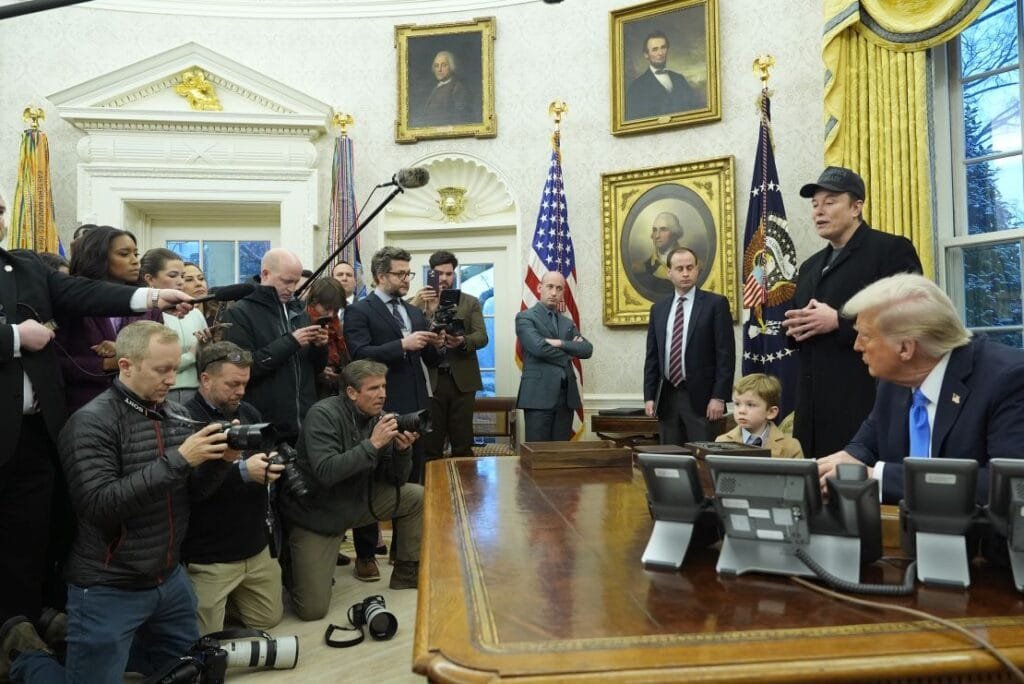
What Is “Press Pool” Access? Oval Office
The fight over AP Trump Oval Office access centers on a special group of reporters called the “press pool.”24
The Oval Office is very small.25 The President is often moving quickly. It is not possible for all reporters to be there at once. So, the White House uses a system:
- The Pool: A small, rotating group of reporters, photographers, and video journalists is chosen each day. They are the eyes and ears for all news outlets.
- The Access: This pool follows the President closely. They cover important moments. This includes signing laws in the Oval Office and answering quick questions. As the President walks to the helicopter (Marine One).
- The Sharing: The pool reporters immediately share everything they see and hear with all other news organizations. This ensures that the public gets fast, detailed news.
For decades, the White House Correspondents’ Association decided who was in the pool.27 The Trump administration took that power away. It then used that power to keep the AP out. AP argued that losing this access means losing the ability to report quickly and fairly to the world.

The Big Legal Arguments
The legal battle is about the US Constitution’s First Amendment.28 This amendment protects freedom of speech and the press.29
The AP’s Argument: No Punishment for Viewpoint
The AP’s lawyers argue that the First Amendment does not stop at the Oval Office door. Their case is based on a rule called viewpoint discrimination.
- Equal Treatment: The AP argues that if the White House opens its doors to some journalists for a news event. It cannot shut the doors to others because it dislikes what they write or say.
- The Government Cannot Control Speech: The AP says that letting the government punish a news outlet. For its choice of words is a direct threat to the First Amendment. It allows the government to control what the press reports.34
- Public’s Right to Know: AP’s Executive Editor, Julie Pace, wrote that the case is not just about the AP. It is about the public’s freedom to get independent news about the government.
The Trump Administration’s Argument: Limited Space, Limited Rights
The Justice Department lawyers, arguing for the administration, made a different claim. They argued that the First Amendment does not give the AP a right to access these non-public areas.
- Limited Space: They said that because the Oval Office has very limited space. The President must be able to choose who to invite.
- Special Guests: A Justice Department lawyer argued that the President invites Republicans. But not Democrats, into the Oval Office for ceremonies. The White House can invite “favored reporters and not disfavored reporters” for the same reason.
- No Right to Special Access: They said the AP has no right to the “special access” of the press pool. It is up to the White House to decide who to invite.
The Earlier Court Ruling Oval Office
Before the case reached the Appeals Court, a lower court judge made a ruling in April 40$\text{2025}$.41
- The Judge’s Order: US District Judge Trevor McFadden ruled in favor of the AP. He said that the government cannot retaliate against a news organization for its speech. He ordered the White House to immediately let AP journalists return to the Oval Office.
- Judge’s Viewpoint: Judge McFadden, who was appointed by President Trump. Wrote: “The Constitution forbids viewpoint discrimination, even in a nonpublic forum like the Oval Office.”
- The Hold: However, the Appeals Court later paused this order. This means the AP has remained barred from the pool while the appeal takes place. The hearing on Monday was the latest step in this appeal.
The fact that a Trump-appointed judge ruled against the administration showed the strength of the First Amendment argument.
The Stakes for All Americans
The fight over AP Trump Oval Office access is much bigger than a single news organization or the name of a gulf. It is about setting the rules for how a free press can cover the most powerful office in the world.47
The outcome of this case will decide if a sitting President can use the power of the White House to punish journalists for the content of their work. A ruling in favor of the AP will affirm the strong limits on government power to control the news. A ruling in favor of the administration could give the President new tools to limit which news gets reported to the public.
The Appeals Court did not give a ruling on Monday. The final decision will be a major landmark in the history of American press freedom. It will set a rule for how all future presidents must deal with the journalists who work on behalf of the American public.
Read More Articles Click Here. Read Previous Article Click Here.
About The Author








Leave a Reply