
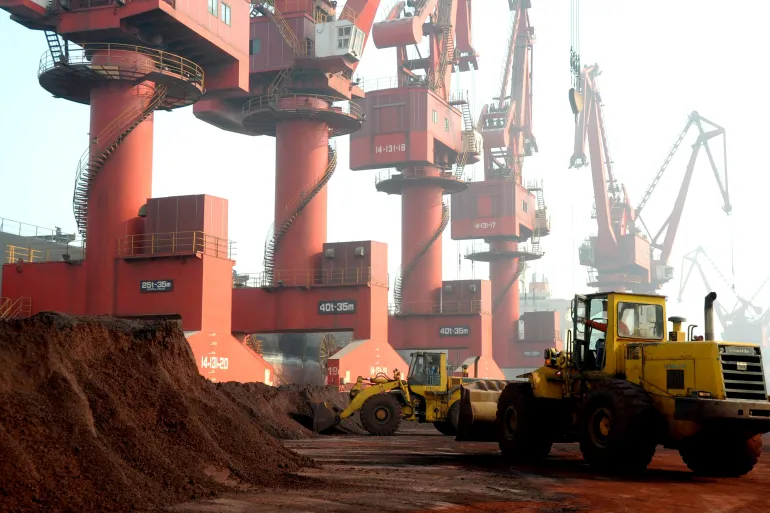
The United States and Australia recently formalized a massive $8.5 billion agreement. This pact targets critical minerals and rare earths. The goal is clear. They want to create a secure, independent supply chain. This is a crucial, bold strategic move. It is a direct response to China’s increasing dominance. However, experts agree on a sobering truth. Despite this massive investment, China is poised to dominate the rare earths market for many years to come. China’s control is not just about mining. Instead, it is structural. It is cemented by decades of strategic investment. Rare Earths
China’s Iron Grip: A Structural Monopoly Rare Earths
Rare earth elements are vital. They are essential for modern defense systems. This is necessary for clean energy technologies. They power electric vehicles (EVs). They are found in fighter jets. Therefore, control over them is immense geopolitical leverage.
Processing Power: The Real Chokehold
China’s dominance goes far beyond raw extraction. China controls nearly 70% of global rare earth mining. This is a significant number. However, the true chokehold lies in processing. China maintains roughly 90% of the world’s rare earth processing capacity. This includes separation and refining. Even when minerals are mined elsewhere, they are often shipped to China. This happens because other nations lack the necessary industrial capacity.
Furthermore, China dominates downstream manufacturing. It controls about 85% of global rare earth permanent magnet production. These magnets are essential components. They are found in wind turbines and EV motors. This vertical integration is a massive advantage. It gives China a cost and speed edge. It is one that no Western economy can currently match.
The Strategic Weaponization
China uses this dominance strategically. It views rare earths as a “trump card.” It uses it as a tool of economic coercion. Recently, Beijing escalated its controls. It announced sweeping new export rules. These new rules assert extraterritorial control. Companies anywhere must seek Chinese government approval. This approval is necessary to export magnets. This applies even if the magnets contain trace amounts of Chinese-origin materials. This move is a strong signal. Beijing is willing to weaponize its control. It will do so to gain trade concessions.
The Allied Response: Too Little, Too Late? Rare Earths
The U.S.-Australia partnership is the most ambitious attempt yet. It aims to build a parallel supply network. This $8.5 billion investment is significant.
Investment and Integration
The pact focuses on accelerating processing capabilities in Australia. Australia has vast mineral reserves. The agreement formalizes joint financing. Both countries are committing $1 billion each. This investment targets separation and refining facilities. The U.S. Defense Department is even funding an advanced gallium refinery in Western Australia. This shows a serious commitment to security. The strategy is based on “friendshoring.” It seeks to build resilience with trusted allies.
The Gap Remains Vast Rare Earths
However, the challenge is structural and massive. China spent decades building this dominance. It cultivated expertise. They trained engineers. It accepted environmental trade-offs. Replicating this ecosystem will take decades, not just a few years.
Consider the scale. One American project aims to produce 1,000 tons of permanent magnets annually. This is less than 1% of China’s annual output. The U.S. is still years away from full-scale domestic production. Projects that are underway will only reach full capacity by 2028 or later. Therefore, the current investment addresses a five-decade lead. The U.S. is playing catch-up.
The Barriers to Breaking the Monopoly Rare Earths
Breaking China’s chokehold faces several severe barriers. These hurdles are technological, financial, and regulatory.
Technology and Expertise
Rare earth processing is technically challenging. It involves complex chemical solvent extraction. This process is difficult to replicate. China controls the necessary know-how. Furthermore, they control specialized equipment and resins. These are vital for efficient extraction. The new Chinese rules now restrict the export of both technology and personnel. This makes it harder for non-Chinese firms. They must build capacity from scratch.
Cost and Market Manipulation Rare Earths
The risk of market manipulation is a major deterrent. New producers face immense financial risk. China can easily flood the market. This action quickly undercuts prices. It makes new Western projects economically unviable. Consequently, government intervention is essential. The U.S. has introduced price floors. This provides a financial shield for producers. However, the costs for Western-sourced materials remain higher. This creates competitive disadvantages for manufacturers.
Environmental and Regulatory Hurdles
Rare earth processing has significant environmental consequences. It often involves radioactive byproducts. It requires extensive chemical waste handling. Western nations have strict environmental regulations. These rules create lengthy permitting challenges. China, historically, accepted lower environmental standards. This gave them a cost advantage. Therefore, new projects in the U.S. and Australia must navigate this complex landscape. They must balance speed with environmental responsibility.
The Long-Term Geopolitical Outcome Rare Earths
The strategic competition over critical minerals will define the next decade. China’s dominance is unlikely to disappear soon.
The country is increasingly consuming its own output. It feeds its booming EV and renewable energy sectors. This shift makes its global supply control even stronger. It is transitioning from global supplier to a self-sufficient consumer. Furthermore, China continues to expand its reach globally. It secures long-term contracts for lithium and cobalt in Africa and Latin America. It is locking in the next generation of supply.
The U.S.-Australia pact is a crucial first step. It is essential for defense security. It is necessary for long-term technological independence. However, it is a marathon, not a sprint. The world must accept that China will wield its dominance for years. The goal now is resilience. It is about creating reliable, high-integrity supply chains. This requires sustained political commitment. It demands constant financial support. Ultimately, it is a costly process. It is the price of reclaiming strategic autonomy in the modern industrial age.
Read Previous Articles Click Here. Read More Articles Click Here.
About The Author












Leave a Reply